Design competition, Team Duronex
IEEE Skye Expedition: Drone Delivery Platform
A modular payload-delivery platform that clips onto almost any UAV with an electromagnet, released over ROS 2.
- Hardware
- Mechanisms
My contributions
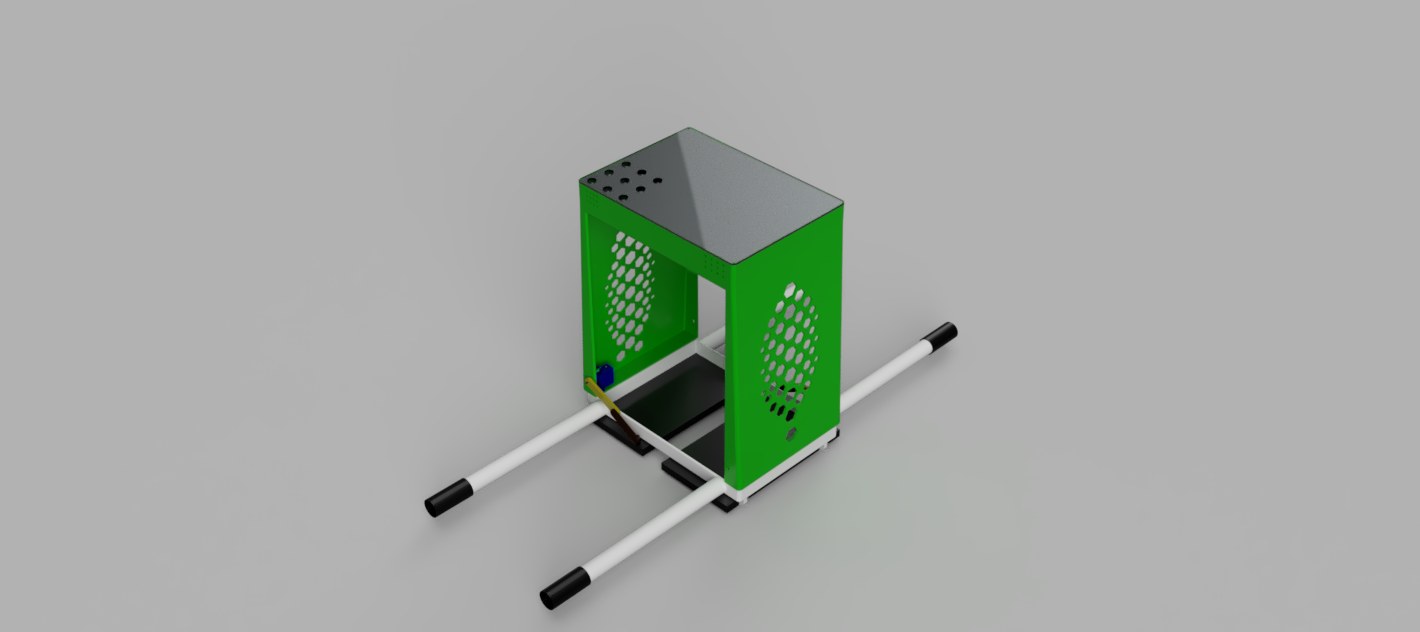
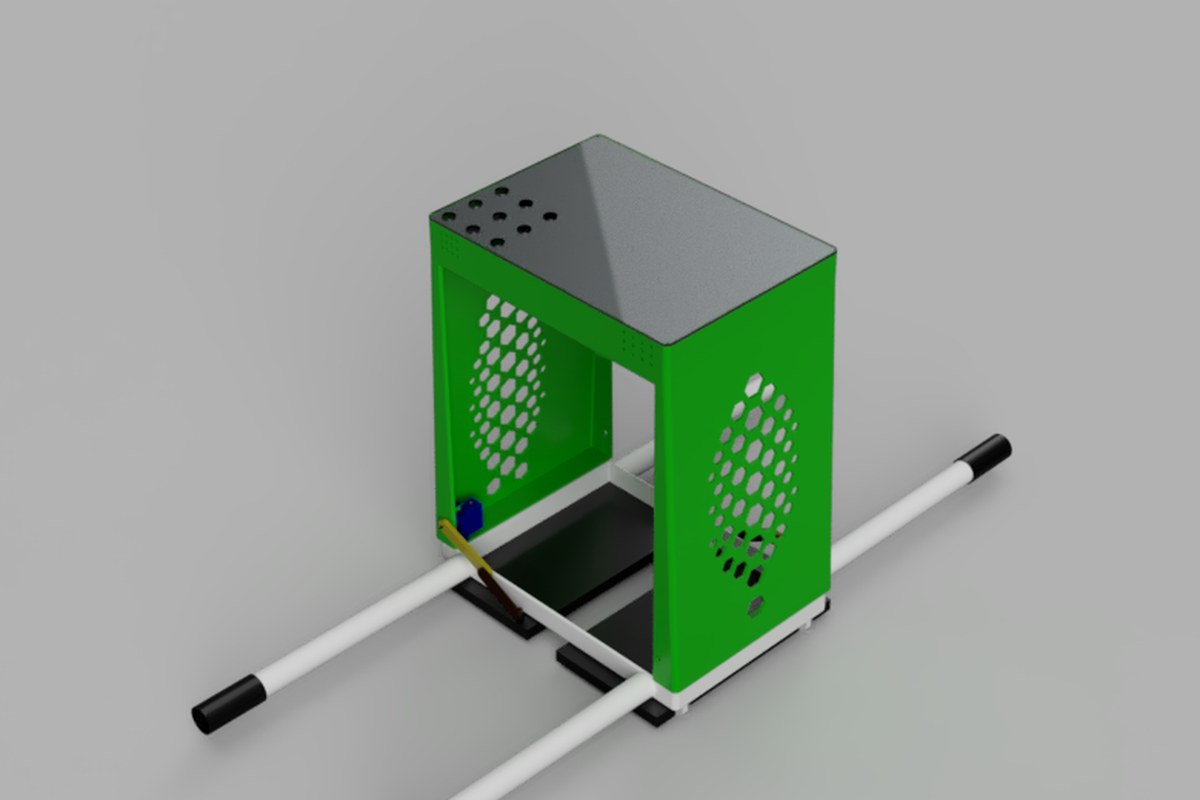
- Designed a modular, layered payload platform in CFRP for 3D printing, with an integrated landing gear.
- Designed a servo-driven two-bar release mechanism and an electromagnet attachment that needs no screws or fasteners on the drone.
- Planned the release control over ROS 2 services (Raspberry Pi to Arduino), and ran ANSYS CFD on the drone and platform.
A design entry for the IEEE Skye Expedition: a payload-delivery platform for drones. The brief ruled out screws and fasteners on the drone, so the design centres on two ideas: modularity, so it can scale to more payloads, and compatibility, so it attaches to almost any UAV without modifying it.
The platform
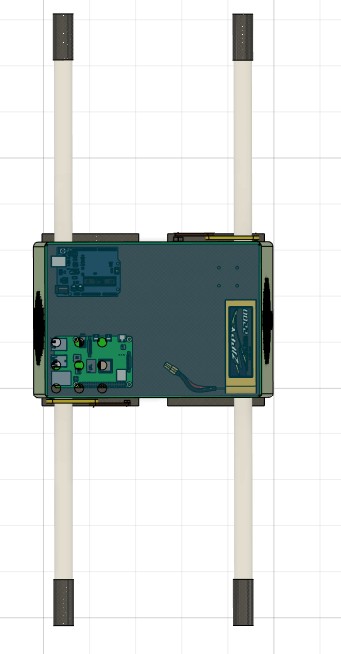
Three layers, 3D printed in carbon-fibre-reinforced polymer (CFRP) for strength at low weight: a movable bottom base that holds the payload, a fixed middle frame that carries the electronics, and a laser-cut metal top plate. The drone's own landing gear got in the way, so a similar wide-stance gear was built into the platform base. The estimated weight is about 2.2 kg.
Releasing the payload
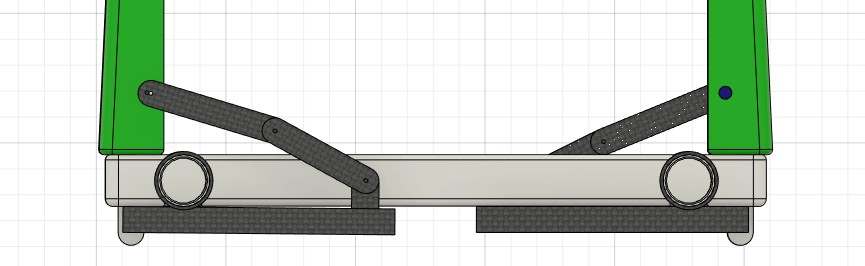
The movable base hangs on a two-bar linkage driven by two servos on diagonal corners, which keeps the centre of mass balanced. Turning the servos lowers the base and drops the payload; turning them back resets it.
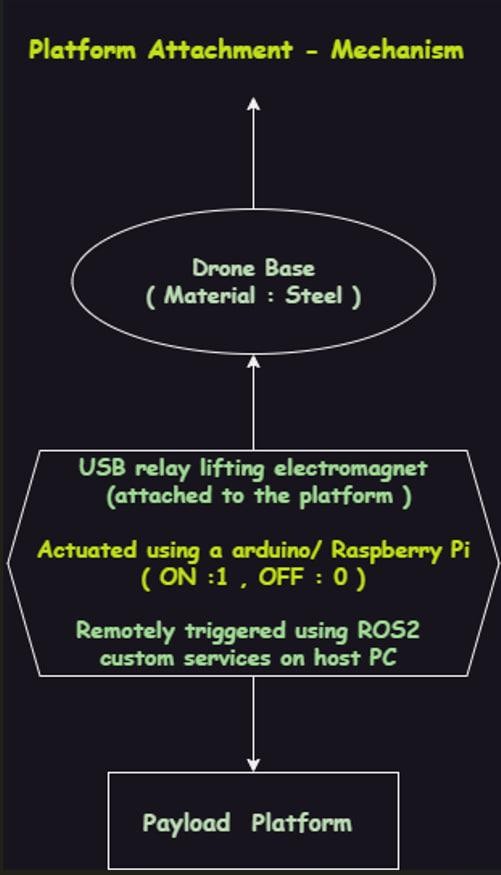
A Raspberry Pi 4 on the platform talks to the ground over Wi-Fi with ROS 2. Calling a ROS 2 service tells an Arduino Uno to drive the servos down or back up.
Attaching to any drone
A relay electromagnet rated for 10 kg holds the platform to the drone. In one version the magnet sits under the drone and is switched from a spare channel on the pilot's remote; in the other it sits on the platform and the Arduino switches it, so any drone with a steel base can carry it.
Aerodynamics
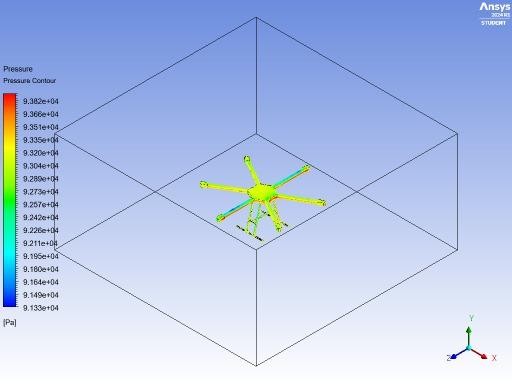
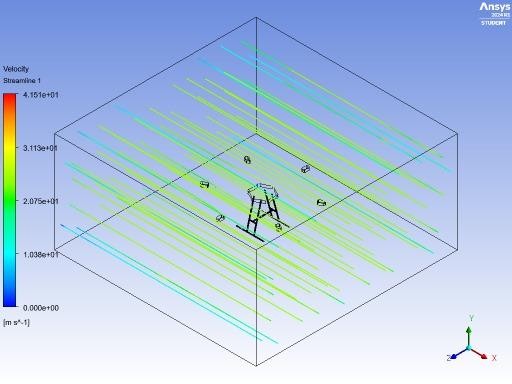
ANSYS CFD on the drone and the platform checked the pressure field and airflow around the design.
Gallery